
Treatment 05 · HALO TRIBRID
HALO TRIBRID
laser skin renewal
Three wavelengths, three depths, in one session. Used for texture, sun damage, pigmentation and scarring.
What it is
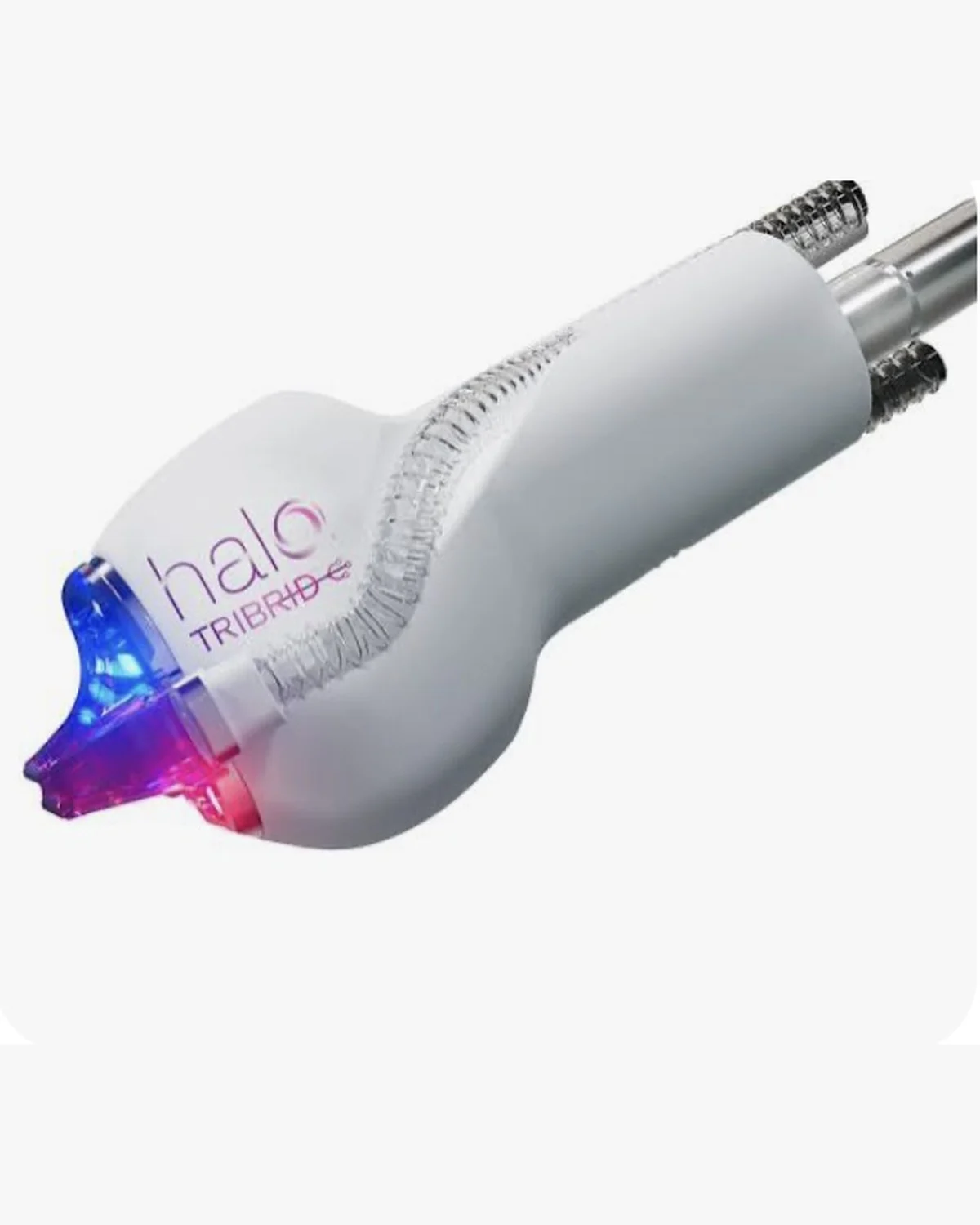
A laser treatment on the Sciton JOULE X platform using the HALO TRIBRID handpiece. It combines three wavelengths that can be used together in one pass or separately: 2940 nm (erbium, ablative) at the skin surface, tunable from 20 to 150 microns; 1927 nm (non-ablative, the Super MOXI wavelength) for superficial pigment; and 1470 nm (non-ablative) reaching 300 to 700 microns into the dermis. The settings, and which wavelengths are used, are chosen for your skin at your consultation.
Why it stands out
Sciton released HALO TRIBRID in September 2025 as the first handpiece to combine three resurfacing wavelengths that are controlled independently, so that surface texture, superficial pigment and the deeper dermis can each be treated to their own depth in a single session rather than in three. The handpiece tracks its own movement optically and adjusts scan speed to the hand; for the two non-ablative wavelengths it adjusts energy in real time to skin temperature; coloured lights on the tip show the pace of each pass; integrated cooling and smoke evacuation are built in. The manufacturer describes recovery as days rather than the weeks of traditional full ablative resurfacing. These are the manufacturer's descriptions of the device, not promises about your result; results vary from person to person.
Beneath the surface
Skin is built in layers: the epidermis on top, then the dermis where collagen lives, then fat, muscle and bone. The three wavelengths reach three depths: 2940 nm removes a very thin, controlled layer at the surface (20 to 150 microns); 1927 nm is absorbed in the upper skin where sun-related pigment sits; 1470 nm reaches 300 to 700 microns into the dermis, leaving the surface intact. Broadband light is a broad band of filtered light, not a laser, absorbed by pigment and by the blood in small vessels.
Scroll, and the layers separate; the beams draw down to their depths.
A session
A topical anaesthetic cream is applied first. Eye shields go on. The handpiece is passed over the skin in a set pattern; its optical tracking adjusts to the speed of the hand, and for the two non-ablative wavelengths the energy adjusts in real time to your skin temperature. It is uncomfortable: a hot, prickling sensation that the cream and the air cooling reduce but do not remove. A face treatment takes about an hour in the room.
Afterwards
Recovery depends on the settings used, which depend on your skin. Typically the skin is hot and red for the first hours and swollen for a day or two; over days two and three it feels and looks like fine sandpaper as tiny treated spots darken, and they flake away around days four and five. Some people need longer, and some need a week away from work or social plans. Strict sun protection is essential for weeks afterwards. How many treatments, and how often, is decided for your skin and reassessed each time; one or two a year is common.
Results vary from person to person.
Risks and suitability
Redness, swelling, crusting, temporary darkening or lightening of the skin, cold-sore flare-ups, infection and, rarely, scarring. Darker skin carries a higher risk of post-inflammatory pigmentation, so settings are conservative and a test area may be done first.
Every procedure carries risks. We go through them with you at your consultation, before anything is decided. Suitability is assessed at your consultation; some skin types, medications and conditions rule a treatment out.
Consultations and treatments are for adults aged 18 and over.
Wondering whether this is right for your skin? That is what the consultation is for.
Book online