
Treatment 06 · HALO TRIBRID
Super MOXI
1927 nm
The lightest of the three wavelengths, used on its own: a non-ablative fractional laser for early sun damage and uneven pigment, with a short recovery.
What it is
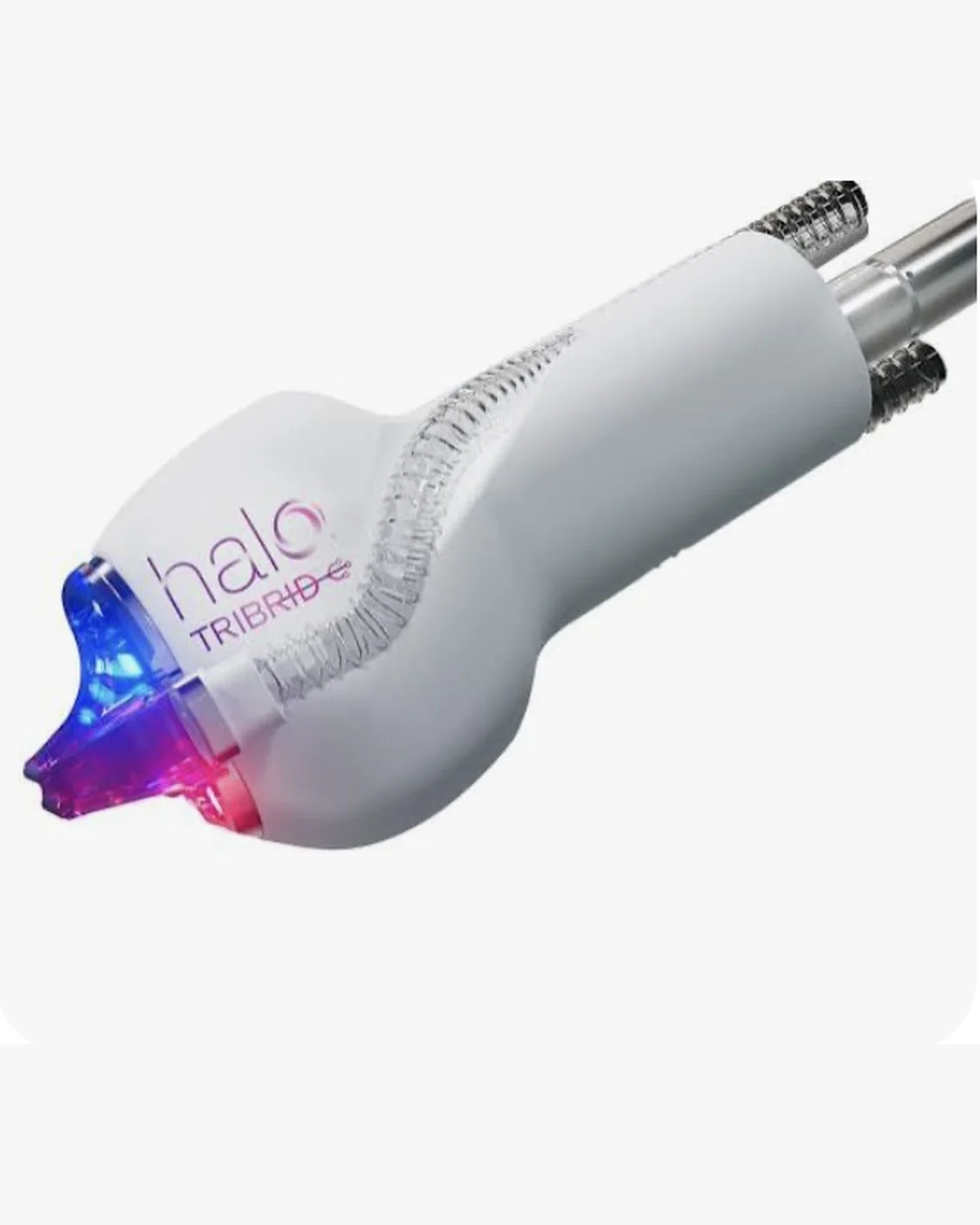
On this clinic's HALO TRIBRID handpiece, Super MOXI is the 1927 nm wavelength used on its own. It is a non-ablative fractional laser: it leaves the surface intact and creates thousands of microscopic treatment zones in the superficial skin, where sun-related pigment sits, relying on the skin's own healing response. It is the lightest of the laser treatments at the clinic and is often chosen for early sun damage, as a first laser treatment, or for maintenance between deeper treatments. It can also be combined with broadband light in the same visit.
Beneath the surface
Skin is built in layers: the epidermis on top, then the dermis where collagen lives, then fat, muscle and bone. The three wavelengths reach three depths: 2940 nm removes a very thin, controlled layer at the surface (20 to 150 microns); 1927 nm is absorbed in the upper skin where sun-related pigment sits; 1470 nm reaches 300 to 700 microns into the dermis, leaving the surface intact. Broadband light is a broad band of filtered light, not a laser, absorbed by pigment and by the blood in small vessels.
Scroll, and the layers separate; the beams draw down to their depths.
A session
A topical anaesthetic cream may be used, depending on the settings. Eye shields go on and the handpiece is passed over the skin in a set pattern. The laser part of a face treatment takes about ten to fifteen minutes; allow 30 to 45 minutes in the room with photographs and aftercare.
Afterwards
Usually mild redness that settles within one to two days, then tiny darkened spots as the skin renews, which flake away over the following few days. Make-up can usually be worn the next day. Strict sun protection afterwards. Many people have a short course and then occasional maintenance; how many, and how often, is decided for your skin.
Results vary from person to person.
Risks and suitability
Redness, swelling, dryness, itching, temporary darkening or lightening of the skin, cold-sore flare-ups, infection and, rarely, scarring. Darker skin carries a higher risk of post-inflammatory pigmentation, so settings are conservative and a test area may be done first. Not suitable on tanned skin.
Every procedure carries risks. We go through them with you at your consultation, before anything is decided. Suitability is assessed at your consultation; some skin types, medications and conditions rule a treatment out.
Consultations and treatments are for adults aged 18 and over.
Wondering whether this is right for your skin? That is what the consultation is for.
Book online